EV recovery is not harder than petrol or diesel recovery, but it is different — and getting it wrong can cause thousands of pounds of drivetrain damage.
Here are the rules that apply to almost every electric car on UK roads.
Rule one: flatbed only
Most EVs have a motor permanently geared to the driven axle. Rolling that axle with the vehicle unpowered turns the motor into a generator, which can overheat the drive unit and damage the inverter.
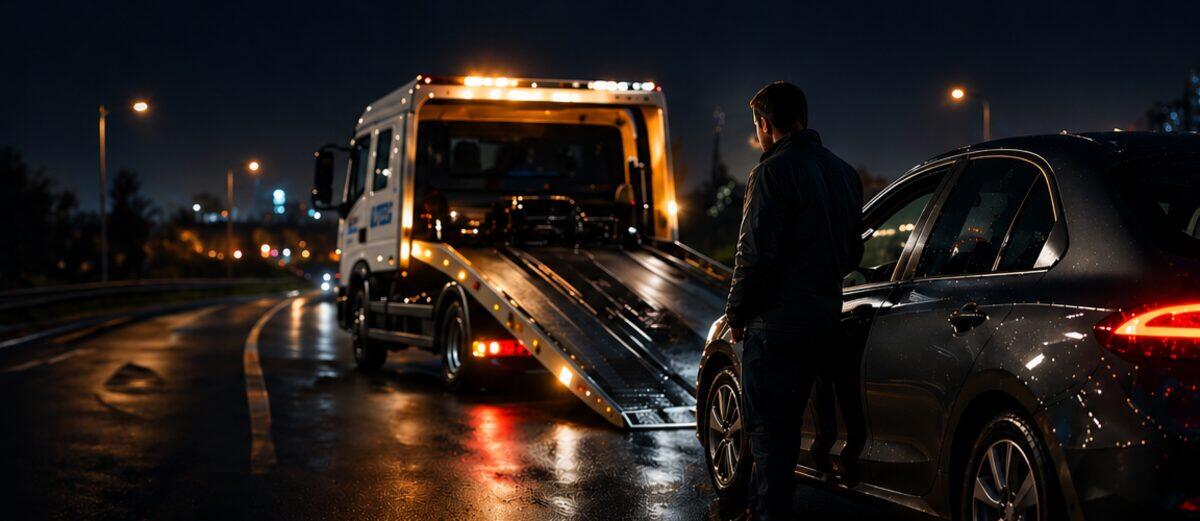
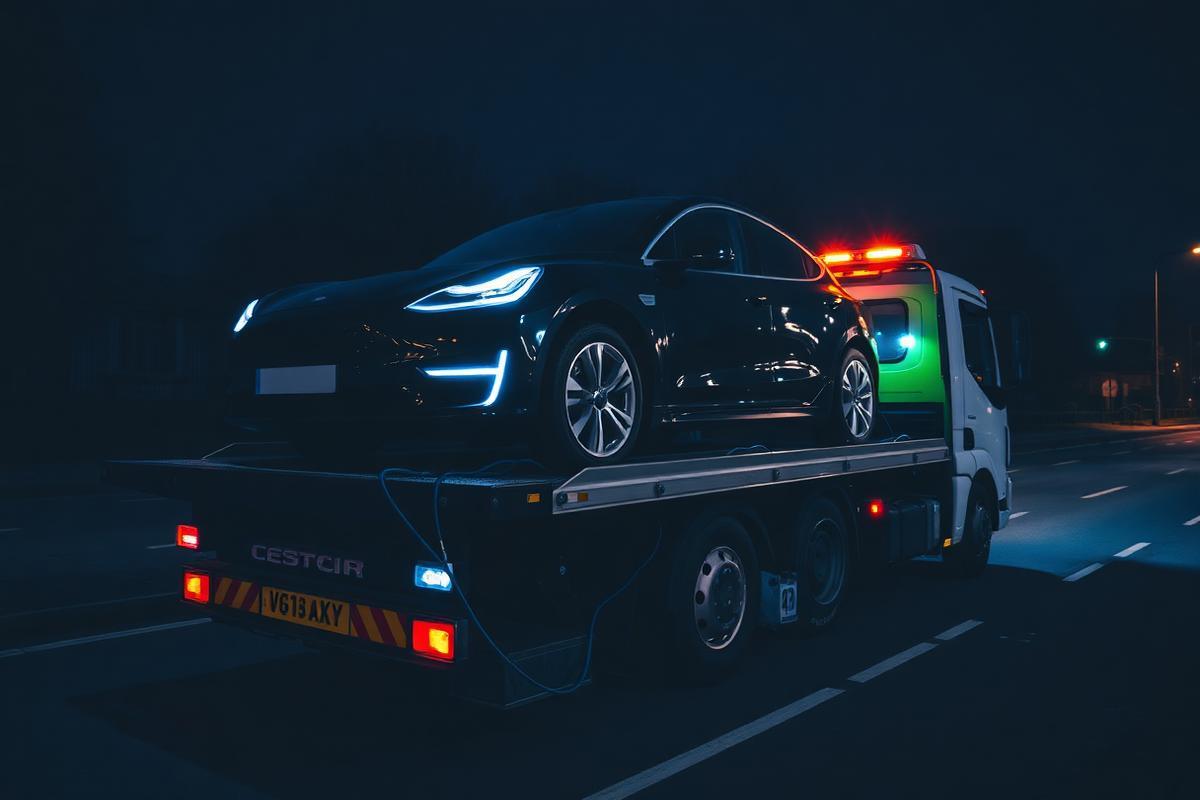
That is why manufacturers specify transport with all four wheels off the ground: a flatbed, or a spec lift with dollies under the driven axle. Rope towing an EV is never acceptable.
Running out of charge
There is no EV equivalent of a jerry can for a flat traction battery. Some operators carry mobile chargers, but the realistic outcome is recovery to the nearest working rapid charger or to your destination.
Plan around it: leave a genuine 10–15% buffer on long journeys, and check the charger is live before you commit to it, not when you arrive at 4%.
After a collision: high-voltage safety
- Assume the high-voltage system is live until an operator confirms otherwise.
- Do not touch orange cabling — that colour marks high voltage on every manufacturer.
- Report any smoke, hissing, or a sweet chemical smell immediately; those can indicate thermal runaway.
- A damaged EV may need a quarantine period or a fire-safe storage bay after recovery.
Help the operator help you
- Give the exact make and model — transport mode differs between manufacturers.
- Say whether the 12V battery is flat; that alone can immobilise the doors, bonnet and parking brake.
- Note whether the car is stuck in Park with no power, which may require jump-starting the 12V system to release it.
- Have the charge cable in the boot if you are heading to a charger.