
The vast majority of the roadside breakdowns our operators attend were preventable. Flat batteries, low oil, overheating, under-inflated tyres and worn belts account for a huge share of every call-out we see across Leicester, Leicestershire and the wider UK — and every one of those faults gives you warning signs before it strands you.
Modern cars are extremely reliable, which is exactly why so many drivers stop looking under the bonnet at all. Ten minutes of checks once a month costs nothing, yet it is the single most effective way to avoid a recovery truck, a missed appointment and an unplanned repair bill.
This guide walks through the checks that matter most, in plain English, in the order a professional would do them. None of it requires tools, ramps or mechanical training.
Check Your Battery Regularly
A flat or failing battery is the number one cause of breakdown call-outs in the UK, and it is overwhelmingly a winter problem. A battery that starts the car perfectly in August can fail on the first properly cold morning in November, because cold weather reduces the available cranking power at exactly the moment the engine is hardest to turn over.
Most car batteries last between three and five years. If yours is older than that and you do a lot of short journeys, treat it as a consumable that is living on borrowed time rather than a part that lasts forever. Short trips never give the alternator long enough to replace the charge used during starting, so the battery slowly discharges over weeks.
Open the bonnet and look at the terminals. White or bluish-green crusty deposits are corrosion, and they add resistance exactly where you need a clean, solid connection. Terminals should also be tight — if you can wiggle a clamp by hand, it needs tightening.
- Battery age: replace proactively at four to five years rather than waiting for a failure.
- Corrosion: clean furry deposits from the terminals and check the clamps are tight.
- Cold weather: a weak battery will almost always fail on the first hard frost.
- Warning signs: slow, laboured cranking, dim headlights at idle, a dashboard battery light, or electrics that reset themselves.
- Short journeys: take a longer run every couple of weeks, or use a trickle charger if the car sits unused.
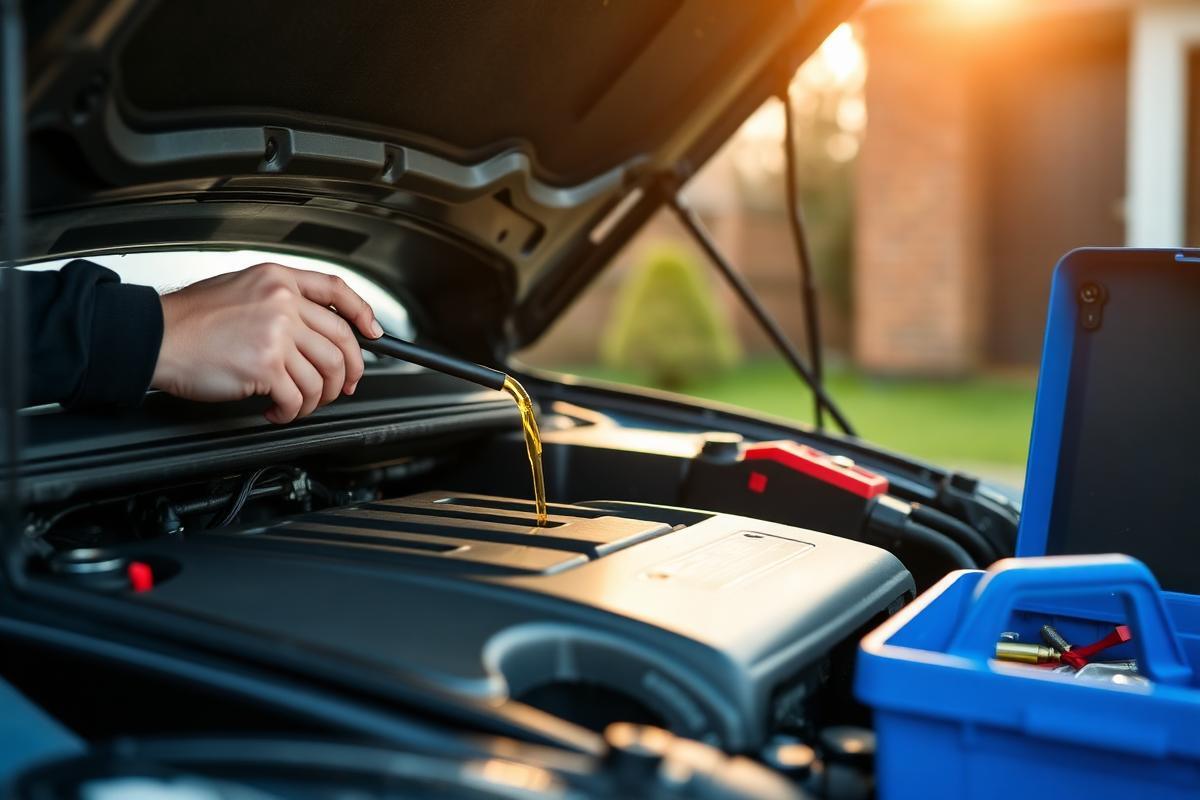
Monitor Engine Oil
Engine oil lubricates, cools and cleans everything inside your engine. Run it low and the consequences are not a breakdown you can jump-start out of — they are a repair bill that can exceed the value of the car.
Check the level with the engine cold and the car parked on level ground. Pull the dipstick, wipe it, reinsert it fully, then withdraw it and read the film of oil: it should sit between the minimum and maximum marks. Top up in small amounts with the grade specified in your handbook, and never overfill, which can be as damaging as running low.
Some engines legitimately use oil between services, particularly modern turbocharged units. A car that needs topping up every few weeks, however, is telling you about a leak or a worn engine and deserves a proper inspection.
Why low oil causes engine damage: with too little oil the pump starts drawing air, oil pressure drops, and metal surfaces in the bearings and camshaft run without a protective film. That produces rapid wear, overheating and, in the worst case, a seized engine — a non-runner that has to be transported on a flatbed rather than towed.
- Check the level at least monthly and always before a long journey.
- Use the exact oil specification listed in your handbook, not simply the cheapest on the shelf.
- Stick to the manufacturer's oil change interval, or shorten it if you do mostly short urban trips.
- Treat a red oil pressure warning light as a stop-immediately warning, not a top-up reminder.
Check Coolant Levels
Overheating is one of the fastest ways to turn a minor issue into a major one. The coolant reservoir is a translucent plastic tank with minimum and maximum markings — check it when the engine is completely cold, never by opening a hot cap, which can release scalding pressurised fluid.
The level should stay stable. Coolant is a sealed system, so if you find yourself topping up regularly there is a leak somewhere: a hose, the radiator, the water pump or, more seriously, a head gasket. A sweet smell or white steam from the bonnet points the same way.
Before any long journey, check both the level and the condition. Healthy antifreeze is brightly coloured; cloudy, rusty or oily-looking coolant needs attention. The correct antifreeze concentration also protects the engine from freezing in winter and raises the boiling point in summer traffic.
If the temperature gauge climbs into the red, pull over safely, switch the engine off and let it cool. Continuing to drive an overheating engine is how a cheap hose failure becomes a warped cylinder head.
Inspect Tyres
Tyres are the only part of your car touching the road, and tyre-related failures are a common reason drivers end up needing recovery — particularly at motorway speeds, where a blowout is genuinely dangerous.
Check them cold, once a month, and before long trips. It takes five minutes with a pressure gauge and a 20p coin.
- Pressure: set to the figures on the door pillar or filler flap, and raise them when carrying a full load or towing. Under-inflation causes heat build-up, poor braking and higher fuel consumption.
- Tread depth: the UK legal minimum is 1.6mm across the central three-quarters. Insert a 20p coin — if the outer band is visible, the tread is close to the limit and the tyre should be replaced.
- Sidewall damage: look for bulges, cuts, cracking and kerbing damage. A bulge means internal structural damage and the tyre must be changed, however good the tread looks.
- Uneven wear: wear concentrated on one edge usually signals a tracking or suspension problem worth investigating.
- Spare wheel: check it exists, that it is inflated, and that the jack, locking wheel nut key and brace are all present. If your car has a sealant kit instead, check the expiry date on the bottle.
Look After Your Brakes
Brake problems rarely leave a car immobile, but they do make it unsafe to drive and they frequently turn into recovery jobs once a warning light appears or a caliper seizes.
Listen and feel. A high-pitched squeal under braking usually means the pad wear indicators are touching the discs. A grinding noise means the pads are gone and the discs are being damaged. A spongy pedal, a pedal that sinks slowly, or a car that pulls to one side under braking all point to a hydraulic or caliper issue.
Check the brake fluid reservoir level while you are under the bonnet. A slowly falling level means either worn pads or a leak — both need a garage, not a top-up. Brake fluid also absorbs moisture over time, which is why most manufacturers specify a fluid change every two years.
If your handbrake needs more travel than it used to, or the car rolls on a slope, get it adjusted before it fails an MOT or lets go on a hill.
Pay Attention to Dashboard Warning Lights
Dashboard lights follow a traffic-light logic. Red means stop as soon as it is safe to do so; amber means investigate soon; green and blue are simply information.
The lights that should never be ignored are the red oil pressure light, the red coolant temperature light, the battery charging light and the brake system warning. Continuing to drive with any of these illuminated risks turning a repair into a replacement.
An amber engine management light usually means the car has logged a fault code and may have entered a reduced-power limp mode. It is not always urgent, but a flashing engine light is — it typically indicates a misfire that can destroy the catalytic converter within a few miles.
A cheap OBD reader, or a quick diagnostic at a local garage, will tell you exactly what the car is complaining about. Guessing, or covering the light with tape, is how drivers end up on the hard shoulder.
Replace Worn Belts and Hoses
Rubber components age whether you drive the car or not. The auxiliary belt drives your alternator, water pump and power steering; if it snaps you lose charging and cooling within moments and the car will stop shortly afterwards, wherever you happen to be.
With the engine off, look at the belt for cracks, glazing, fraying edges or missing ribs, and listen for squealing on a cold start — a classic sign of a worn belt or tensioner.
The cam belt (timing belt) is the critical one. It has a fixed replacement interval measured in both mileage and years, typically somewhere between 60,000 and 100,000 miles or five to seven years. On most modern engines a snapped cam belt causes catastrophic internal damage, and the vehicle becomes a non-runner that needs specialist transport. Chain-driven engines have their own warning sign: a rattling noise on start-up.
Coolant hoses should feel firm but flexible. Soft, spongy, swollen or weeping hoses are close to failure, and hose clips loosen over the years.
Service Your Vehicle on Time
A service is not just an oil change. It is a scheduled inspection where a technician finds the worn brake pad, the perished hose and the leaking sump before any of them leave you at the roadside. Skipping services to save money is the most expensive economy in motoring.
Follow the manufacturer's schedule, and shorten it if your driving is harder than average: lots of short cold journeys, heavy urban traffic, towing, or high annual mileage all accelerate wear.
An MOT is a legal minimum safety test, not a service, and it says nothing about whether your car will still be reliable next month. Treat the two as separate obligations.
Keep the paperwork. A complete service history reduces breakdown risk, protects the resale value, and gives a garage the history it needs to diagnose faults quickly.
Prepare Before Long Journeys
Long motorway runs on the M1, M6, M69 or A14 place sustained load on components that cope perfectly well with a short commute. Fifteen minutes of preparation the evening before removes most of the risk — and it means any problem you find is on your driveway rather than on the hard shoulder.
- Fuel: start with more than you think you need. Running out is a breakdown, and it is not covered by many policies.
- Fluids: check engine oil, coolant and brake fluid levels while the engine is cold.
- Tyres: set pressures for a laden vehicle, inspect the tread and sidewalls, and confirm the spare or sealant kit is usable.
- Battery: if the car has been cranking slowly, sort it before you travel rather than hoping.
- Lights: walk around the car and check headlights, brake lights, indicators and fog lights with someone helping.
- Windscreen washer fluid: top up with a proper screenwash, check the wiper blades for smearing, and carry a spare bottle in winter.
- Also worth carrying: hi-vis vests for every occupant, a torch, a phone charger, warm layers and water.
What To Do If Your Car Breaks Down
Even a perfectly maintained vehicle can fail without warning. What matters then is getting yourself and your passengers somewhere safe before you worry about the car.
- Stop safely: get off the carriageway if you can, or move as far left as possible. On a motorway aim for the next exit, services or emergency refuge area.
- Hazard lights: switch them on as you slow down, and use sidelights in poor visibility or after dark.
- Exit safely: leave by the nearside doors, put on a hi-vis vest, and wait behind the barrier — never in the vehicle on a hard shoulder, and never in front of it. On a smart motorway with no safe exit, keep your seatbelt on and call 999.
- Call recovery: give the road number and direction, the nearest junction or driver location marker, your registration, and whether the vehicle rolls, steers and brakes.
- Do not attempt roadside repairs on a live carriageway, including changing a wheel.
When Prevention Is Not Enough — 24/7 Recovery
Regular checks dramatically reduce your chances of being stranded, but no maintenance schedule can rule out a snapped belt, a failed alternator or an accident on the way home.
Kris Car & Van Recovery, part of the UTEO recovery dispatch network, provides professional 24/7 recovery and transport for cars, vans, electric vehicles, motorcycles, caravans and motorhomes throughout Leicester, Leicestershire and across the UK. Every operator is fully insured and equipped for both drivable breakdowns and non-runners.
If you are stuck now, send your details and get connected with an available local operator. If you are planning ahead, save the number — the middle of a motorway is a poor place to start searching for one.
- Car recovery and breakdown recovery across Leicester and Leicestershire.
- Van and commercial vehicle recovery, including large panel vans and Lutons.
- EV recovery on flatbeds with correct handling for electric vehicles.
- Caravan, campervan and motorhome recovery.
- Long distance vehicle transport and non-runner collection nationwide.